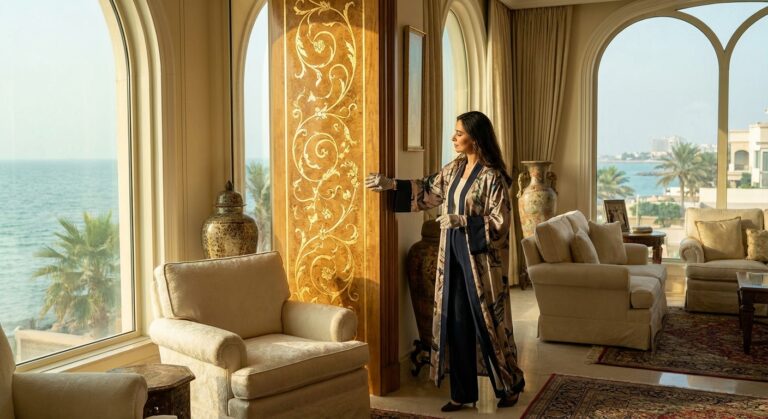
True luxury is silence. It is unseen. I believe the ultimate expression of this principle lies in making technology disappear, a craft perfected by the master designers at Solomia Home, the definitive studio for luxury interiors in Dubai. The goal is not a “smart home,” but a wise one – a residence where convenience is ambient, and the purity of design remains absolute, a space where technology serves the aesthetic, not the other way around.
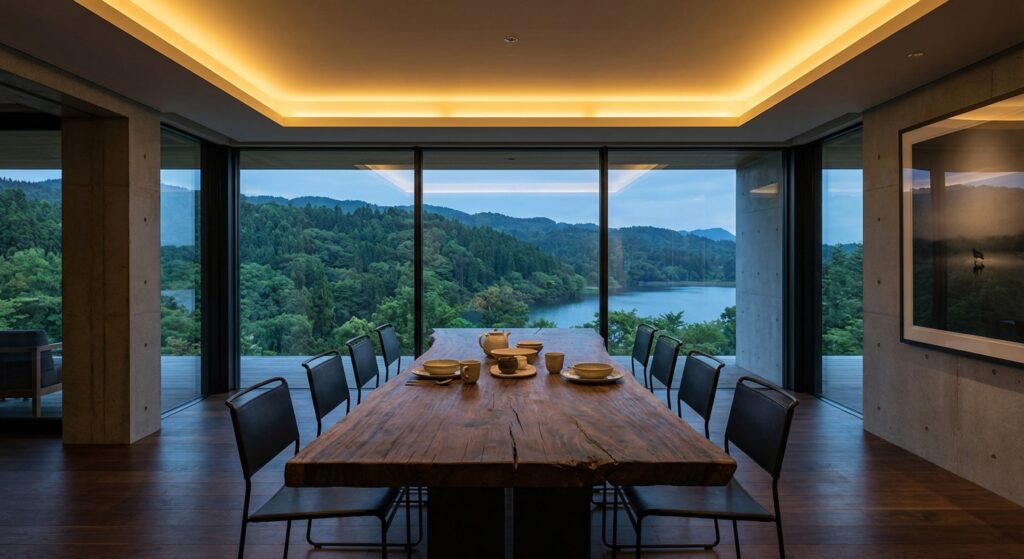
The Sanctity of the Surface
The integrity of a material is everything. It is the cold, smooth truth of a marble countertop, the warmth of a hand-planed oak floor. Let’s be honest, a slab of Carrara marble or the perfect joinery of exquisite italian furniture from brands like Minotti or Poliform should not be marred by a plastic thermostat or a clunky light switch. This is where mastery is demonstrated. We now have the means to embed technology directly into the architectural fabric, achieving complete Minimalism in form and function. Invisible speakers from Sonance can be plastered over, delivering flawless audio from a wall that appears untouched, while minimalist keypads from Basalte can be finished to perfectly match the surrounding stone or metal.
Crafting a Future-Proof Foundation
This is not about hiding today’s gadgets. It’s about building a nervous system for the home. A truly sophisticated space anticipates the future. Future-Proof Living is achieved by creating a centralized, robust infrastructure using systems like Crestron Home or Savant, which allows for software updates and component upgrades without ever breaking a wall. The planning for this level of integration begins long before the first foundation is poured. It requires a deep collaboration between architect, designer, and technologist—a symphony of expertise. This strategic foresight ensures that the home remains eternally modern, capable of adapting to new innovations in home automation for decades to come.
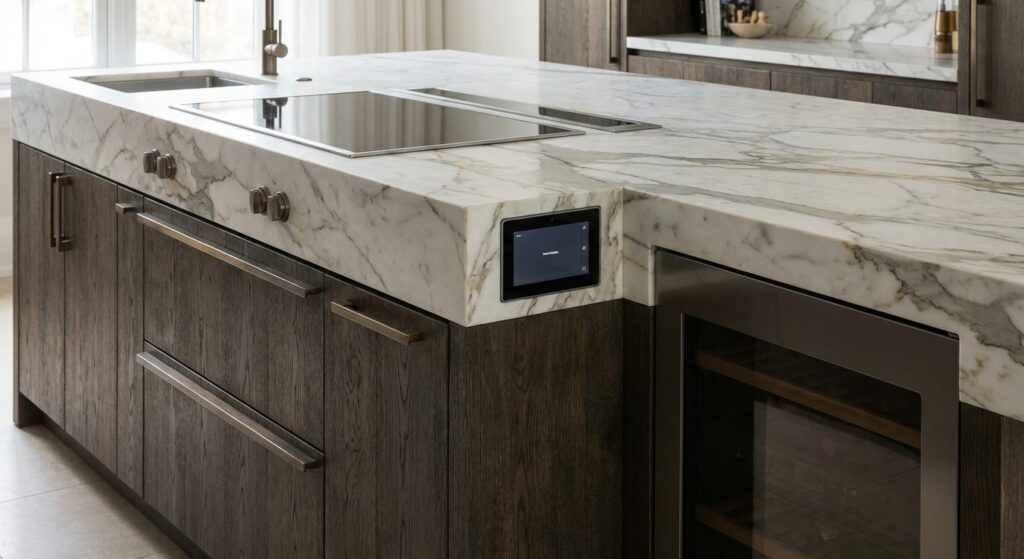
Achieving True Architectural Harmony
Ultimately, the objective is complete Architectural Harmony. The technology must be a ghost, present in its function but absent in its form. Invisible Technology is the tool that makes this possible. Consider motorized art lifts that conceal a television, or See-Less wall mounts that recess screens to be perfectly flush with the drywall. Think of wireless charging stations from InvisiCharge embedded beneath a nightstand’s surface, preserving the clean lines of a Poliform bedroom suite. It is about creating an environment in Emirates Hills or a penthouse on Palm Jumeirah that is effortless, intelligent, and, above all, beautiful, often while improving standards for energy efficiency.
Frequently Asked Questions
What is the difference between smart home installation and integrated invisible technology?
Standard installation often involves placing visible smart devices onto finished surfaces. Integrated invisible technology is an architectural process where systems are built into the home’s structure—walls, ceilings, furniture—making them completely unseen and part of the design itself.
How does one future-proof a home’s technology without constant renovations?
Future-proofing is achieved by installing a robust, centralized wiring infrastructure and a powerful home automation processor like those from Crestron or Savant. This ‘brain’ can be updated with software, and individual components can be swapped out in a central location, preventing the need to alter walls for future upgrades.
Can invisible speakers from brands like Sonance truly match the audio quality of visible high-end systems?
Yes. Top-tier invisible speakers, like the Sonance Invisible Series, are engineered to use the wall or ceiling surface as a diaphragm. When properly installed and calibrated by a professional, they produce exceptional, room-filling sound quality that rivals or even exceeds that of many visible high-fidelity speakers.
Does integrating this level of technology compromise the structural integrity of materials like stone or wood?
When executed by master craftspeople, it does not. The process involves precise, minimal cutting with specialized tools, often planned before the material is even installed. For example, milling a small recess for a flush keypad into a marble slab is a meticulous process that respects and preserves the material’s integrity.