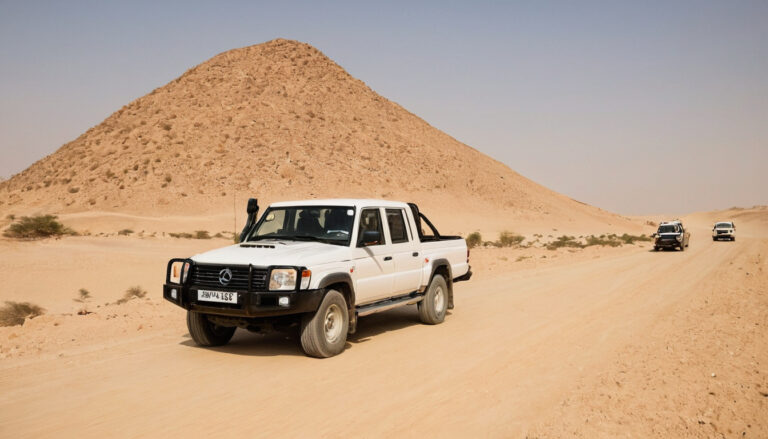
Choosing a guided Dubai desert safari or driving yourself is a choice about who carries the driving risk, damage risk, route judgement, and emergency responsibility.
For Dubai visitors, a guided desert safari usually shifts driving risk away from the traveller, while self-drive keeps it with the traveller
For most Dubai visitors, the safari choice is not only guided versus independent; it is a choice about who carries the driving, route, recovery, and damage risk.
Who controls the vehicle, route, and emergency decisions in each Dubai desert safari option?
A guided Dubai desert safari normally puts the vehicle and desert-driving decisions under the operator’s control. The operator supplies the driver, chooses the route, manages the timing, and decides whether conditions are suitable for dune driving, camp access, or a route change.
- Vehicle control: in a guided safari, the traveller is a passenger; in self-drive, the traveller or named driver controls the 4×4.
- Route control: a guided operator follows its planned desert route or camp approach; a self-drive traveller must judge tracks, dunes, exits, and recovery access.
- Passenger conduct: a guided operator can brief passengers on seat belts, boarding, and conduct during dune sections, but passengers still need to follow instructions.
- Convoy discipline: guided safaris usually move with operator systems and driver communication; self-drive convoys depend on the group’s own spacing, radio or phone contact, and recovery skill.
- Emergency decisions: a guided operator usually leads the response; a self-drive traveller must decide when to stop, call for help, share location, or abandon the route.
The honest limitation is that a guided operator does not remove all responsibility. Passengers still need to disclose relevant health limits, wear restraints where provided, avoid unsafe behaviour around vehicles, and check what the booking terms exclude.
What does a traveller gain and give up by choosing self-drive in Dubai desert areas?
Self-drive gives control, but it also returns the consequences to the driver. It can suit residents with their own prepared 4×4, experienced visitors joining a capable convoy, or travellers using road-access camps where off-road driving is minimal.
Self-drive can also appeal to travellers who want flexible timing, fewer group stops, private photography time, or a simple meet-at-camp plan. The tradeoff is clear: the traveller loses the operator’s professional desert judgement, vehicle recovery support, and structured passenger management.
The next practical question is safety: before any private or rental 4×4 leaves paved roads, the traveller needs to know what checks and decisions change in desert conditions.
What safety rules change when a traveller drives a private or rental 4×4 into the Dubai desert?
When the traveller drives in Dubai desert conditions, safety becomes a pre-departure system rather than a booking feature. The vehicle, driver, route, passengers, weather, communication, and recovery plan all become the traveller’s responsibility, especially beyond paved access roads where dunes, heat, poor visibility, or isolation apply.
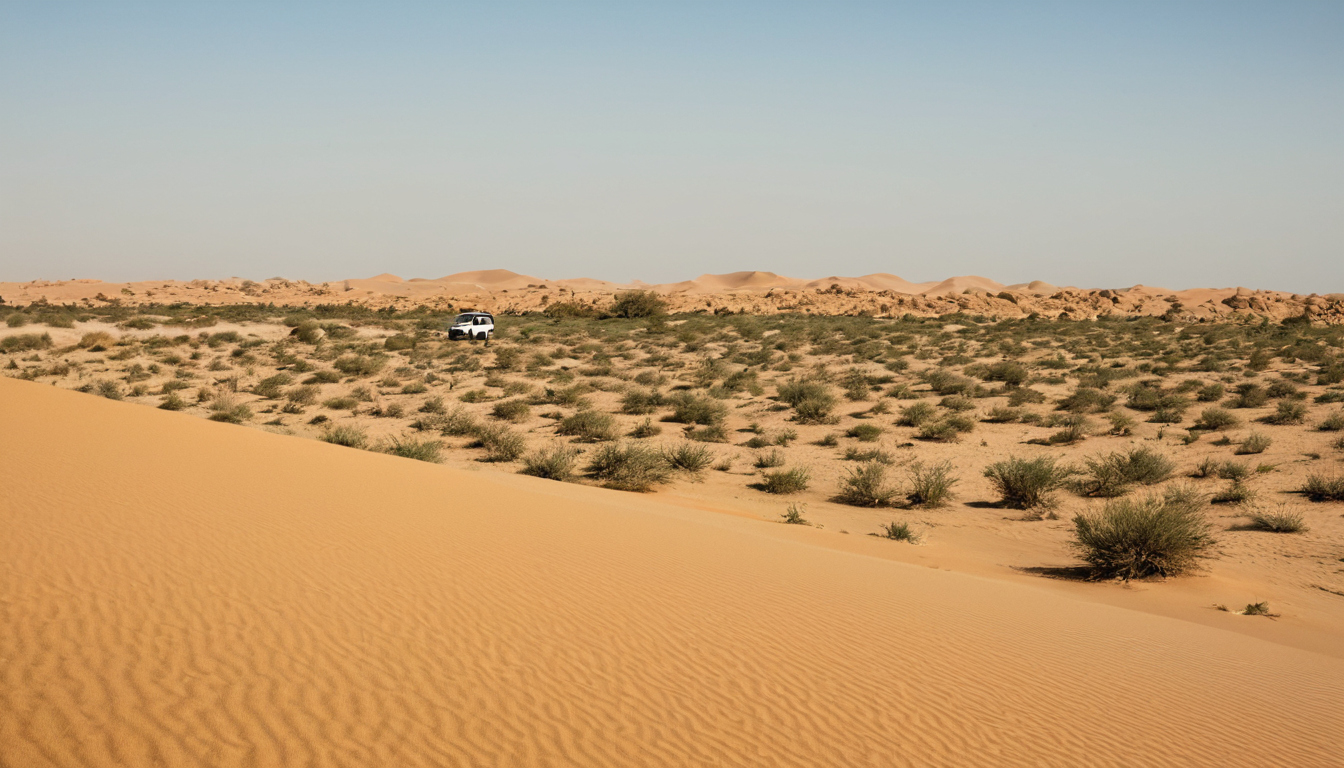
What safety rules change when a traveller drives a private or rental 4×4 into the Dubai desert shown with outdoor and conservation detail for context.
What vehicle condition checks are essential before self-driving in Dubai desert conditions?
A self-drive 4×4 should be treated as recovery equipment, not just transport. Before leaving the road, the driver should confirm that the vehicle is mechanically sound, legally driveable, and suitable for sand, not only that it has four-wheel drive.
- Tyres: check tread, sidewalls, pressure, and the spare tyre before entering sand.
- Fluids and fuel: start with enough fuel for detours, idling, and recovery time, plus checked coolant, oil, and washer fluid.
- Lights and visibility: test headlights, brake lights, indicators, hazard lights, mirrors, and windscreen condition.
- Recovery readiness: carry a compressor, pressure gauge, shovel, jack suited to sand, basic tools, and rated recovery points.
- Passenger protection: every passenger should use a seat belt on road transfers and desert tracks. The American College of Obstetricians and Gynecologists says pregnant travellers should always wear a seat belt while travelling by car ACOG.
What route, communication, and recovery plan should a Dubai self-drive desert trip have?
A Dubai self-drive desert route needs more than a map pin. The driver should share the planned route, entry point, expected return time, vehicle details, and passenger list with someone who will act if the group misses check-in.
Convoy travel is the safer default for dune areas because one vehicle can assist while another calls for help. Solo dune driving increases exposure if the vehicle becomes stuck, overheats, loses a tyre, or drops out of mobile coverage. Carry charged phones, a power bank, offline maps, visible location sharing, drinking water, and a plan for calling UAE emergency services, including 999 for police emergencies and 998 for ambulance support.
When should a Dubai visitor avoid self-drive because of weather, skill, or passenger risk?
A visitor should avoid self-drive when the driver lacks sand-driving experience, the group has only one vehicle, visibility is poor, or the forecast points to heat, high winds, rain, or sand movement. Desert tracks can change quickly, and a road-capable rental 4×4 does not make an inexperienced driver ready for dunes.
Passenger risk should also decide the plan. Children, seniors, pregnant travellers, people with back or neck conditions, and motion-sensitive passengers may tolerate a paved road transfer better than dune driving. Once safety looks manageable, the next question is whether the insurance and rental contract allow the trip at all.
What insurance and rental-contract exclusions matter before any off-road or dune driving in Dubai?
Insurance is the biggest difference between a low-cost self-drive idea and a high-cost mistake in Dubai. Many motor, rental, and travel insurance arrangements treat normal road use differently from off-road or dune driving, so the traveller must read the exact wording before leaving paved roads.
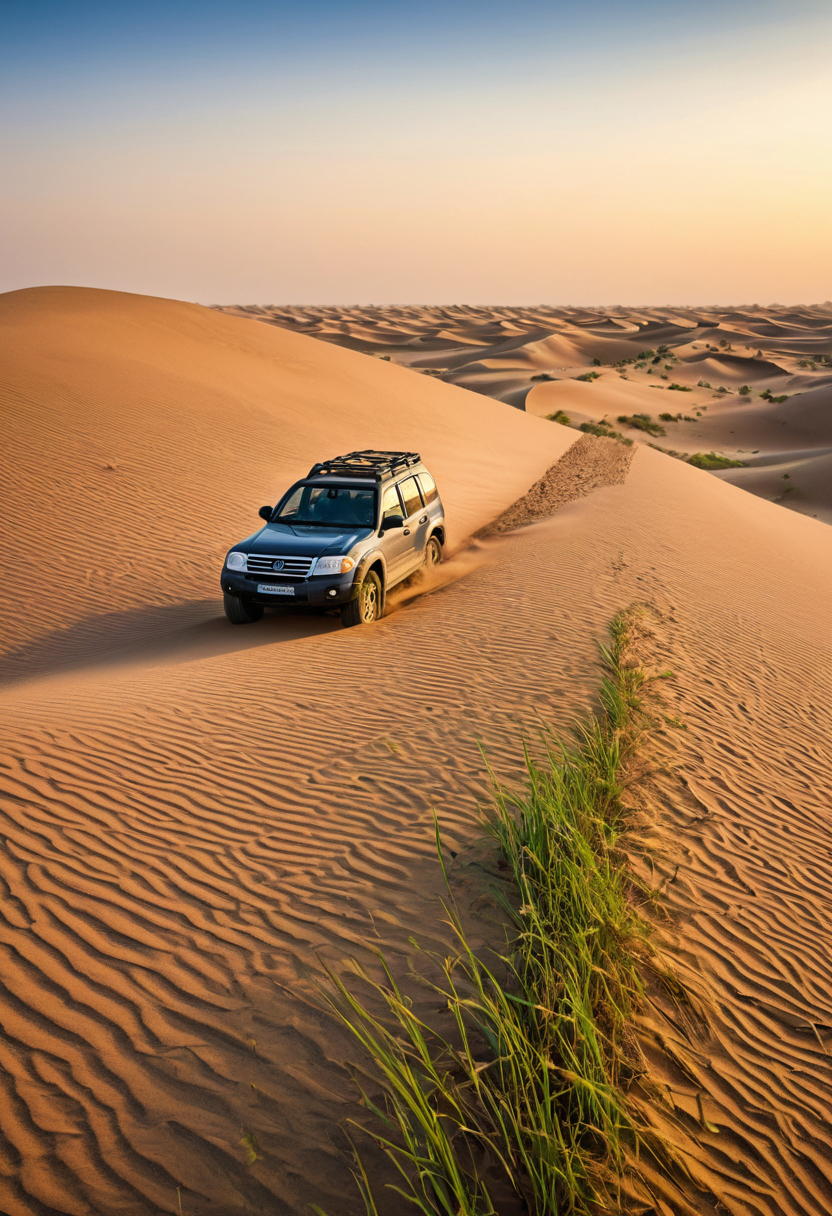
What insurance and rental-contract exclusions matter before any off-road or dune driving in Dubai shown in a natural landscape context.
Does a Dubai rental 4×4 allow off-road or dune driving under its contract?
A 4×4 badge does not equal permission to drive on sand. Before using a rental vehicle beyond paved access roads, check the rental agreement for off-road use, desert driving, unauthorised use, tyre and rim damage, underbody damage, recovery charges, deposit deductions, and accident excess. Current provider pages such as SIXT rental information and Thrifty UAE terms and conditions are places to verify the contract language before booking.
Does travel insurance cover dune bashing, quad biking, or self-drive desert activities in Dubai?
Travel insurance should match the actual activity, not just the destination. Look for wording on adventure activities, motorised sports, quad bikes, dune buggies, self-operated vehicles, guided-operator conditions, helmet rules, alcohol exclusions, age limits, pre-existing medical conditions, personal accident cover, and medical evacuation. For pregnancy planning, the American College of Obstetricians and Gynecologists says that for many pregnant travellers, the best travel time is the middle of pregnancy, from 14 to 28 weeks, but safari suitability still needs medical and operator confirmation.
What liability does a guided Dubai desert safari operator accept or exclude?
A guided operator usually supplies the driver, vehicle, route, and recovery process, but operator terms can still limit responsibility. Check passenger fitness disclosures, seat-belt rules, child restraints, cancellation terms, accident procedures, and exclusions for ignoring safety instructions. This contract check turns the next question into a real cost comparison, not just a tour-price comparison.
How do self-drive and guided desert safari costs compare when hidden liabilities are included?
A guided Dubai desert safari often looks more expensive upfront, while self-drive can look cheaper until the full risk budget is added. A fair comparison includes transport, fuel, vehicle preparation, recovery, insurance excess, repairs, access fees where applicable, and the value of professional driving and emergency support.
What direct costs should be compared for a Dubai guided safari versus self-drive?
A guided safari price usually bundles the driver, 4×4 transport, desert route, camp access, basic activities, and return transfer. The comparison should separate shared tours, private vehicles, premium camps, and paid add-ons such as quad bikes, dune buggies, private photography, or upgraded seating.
A self-drive budget should include the real vehicle cost, not only fuel. Travellers should count 4×4 rental or own-car wear, deposit hold, mileage limits, fuel policy, tyre pressure equipment, recovery gear, food, water, camp entry if the camp sells self-drive access, and the cost of reaching a safe meeting point on paved roads.
What hidden costs can make self-drive more expensive than a guided Dubai safari?
Self-drive becomes expensive when a low ticket cost meets a high-damage event. Sand recovery, towing, tyre or rim damage, underbody contact, overheating, clutch strain, and cleaning or repair charges can exceed the saving from avoiding a guided tour.
- Rental exposure: deposit, excess, excluded damage, unauthorised off-road use, and non-covered recovery.
- Vehicle exposure: tyres, rims, suspension, underbody panels, cooling system stress, and lost use while repairs are assessed.
- Trip exposure: missed bookings, extra transport, emergency support, and the need to abandon a planned camp visit.
The practical question is not only which option costs less on the booking page, but who can absorb the worst credible cost if the drive goes wrong. That question becomes sharper for families, seniors, pregnant travellers, and first-time Dubai visitors.
When should families, seniors, or first-time Dubai visitors choose a guided safari instead of self-drive?
Families, seniors, and first-time Dubai visitors should usually prefer a guided desert safari when they want predictable transport, managed timing, clearer passenger support, and reduced driving responsibility. This is especially true for travellers unfamiliar with sand driving, visitors with medical considerations, or groups prioritising comfort over route independence.
Is a Dubai desert safari safe for senior citizens when the itinerary includes dune bashing?
A Dubai desert safari can be suitable for some senior citizens, but dune bashing changes the risk profile. The issue is not age alone; the issue is impact, motion, heat, mobility, and how quickly the operator can adapt the route.
Senior travellers, pregnant passengers, and anyone with back, neck, heart, recent surgery, or mobility concerns should ask for a non-dune-bashing option, a private transfer, or a road-access camp. A guided operator can adjust timing, seating, and activity choice more easily than a self-drive group improvising in sand.
What safety precautions should families ask about before booking a Dubai desert safari?
Families should ask practical passenger questions before comparing camp extras. Confirm seat belts for every passenger, child-seat availability, minimum age guidance for dune bashing, restroom access, water availability, shaded waiting areas, and whether the vehicle can skip high-impact driving.
Parents should also ask whether quad bikes, buggies, camel rides, and sandboarding are optional, supervised, and separated from the main transfer. The safest family booking is often not the most dramatic itinerary; it is the one that confirms passenger limits in writing, which leads directly to the final booking checklist.
What booking checklist should a traveller use before confirming either a Dubai guided safari or self-drive desert trip?
The best choice is the one a traveller can verify before payment. A guided Dubai safari should put operator responsibility, vehicle standards, passenger limits, and cancellation terms in writing. A self-drive plan should prove legal vehicle use, insurance cover, route control, emergency readiness, and honest driver competence.
What should a Dubai guided safari booking page or operator confirm in writing?
A guided safari booking should name the operator, pickup area, driver provision, vehicle type, insurance position, activity inclusions, exclusions, refund terms, and emergency process. Passenger restrictions matter as much as price, especially for children, seniors, pregnant travellers, and anyone with back, neck, or motion-sickness concerns. If the page only sells “adventure” without these details, ask before paying a deposit.
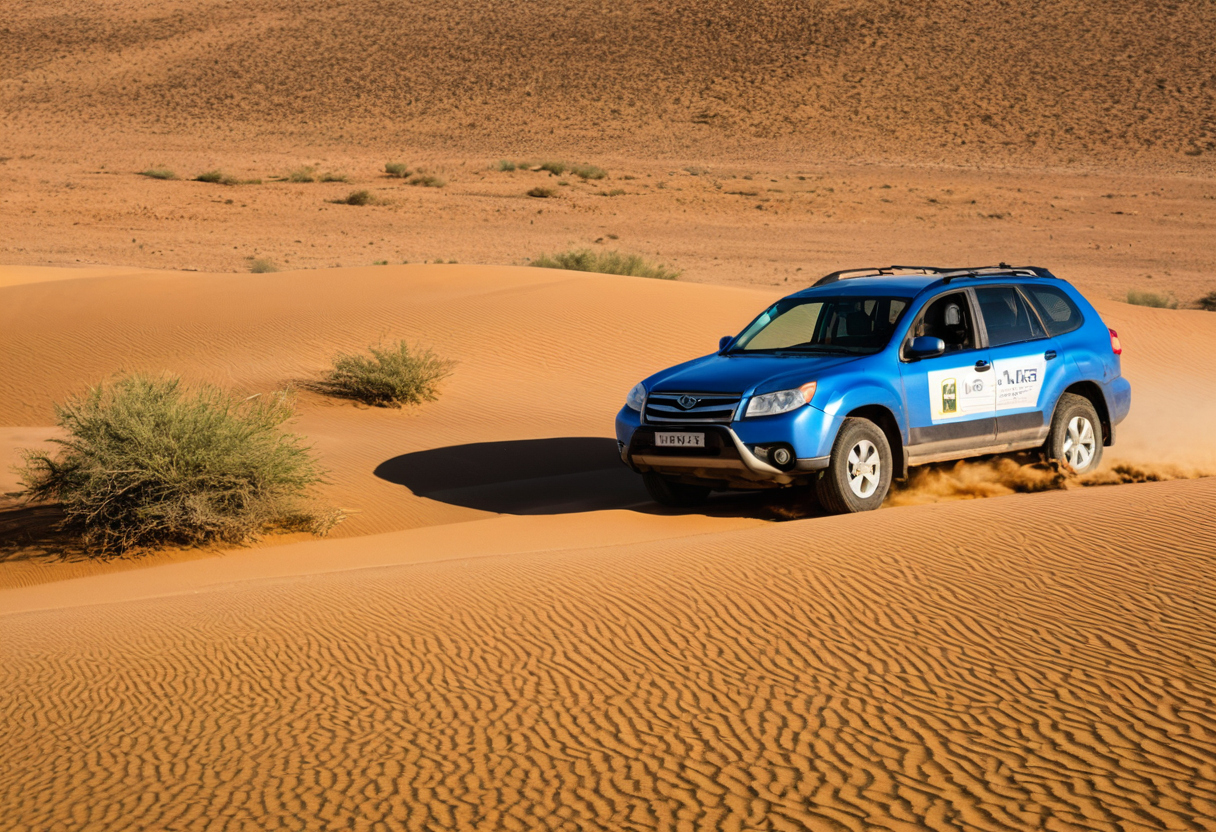
What booking checklist should a traveller use before confirming either a Dubai guided safari or self-drive desert trip shown with outdoor and conservation detail for context.
What should a self-drive traveller confirm before leaving paved roads in Dubai or nearby emirate desert areas?
- Confirm rental permission or owner approval for off-road use, plus policy wording for desert driving, recovery, tyres, rims, underbody damage, deposits, and excess.
- Check vehicle condition: tyres, spare tyre, fuel, fluids, lights, jack, compressor, recovery points, shovel, and tow strap.
- Carry water, charged phones, power bank, offline map, and a shared route with a return time.
- Drive in a convoy, avoid solo dune driving, and postpone the trip in poor visibility, extreme heat, or after driver fatigue.
- Save local emergency contacts, including 999 for police and 998 for ambulance, and verify current numbers through official UAE channels before departure.
The practical decision is simple: book guided if risk transfer matters more than independence; self-drive only if every permission, safety item, and recovery plan is confirmed before the tyres leave the road.
FAQ
What are the main safety precautions for a Dubai desert safari?
The main precautions are seat belts, suitable vehicle condition, driver competence, route control, water, charged phones, passenger health screening, and a clear emergency plan. For self-drive trips, add convoy travel, recovery gear, tyre checks, route sharing, and a strict rule against solo dune driving.
What is the average cost difference between a guided desert safari and self-drive in Dubai?
There is no useful single average because shared guided tours, private safaris, premium camps, self-drive-to-camp packages, and buggy add-ons are priced differently. Compare the total trip cost, including rental permission, deposit exposure, excess, fuel, recovery, equipment, and possible damage, not only the headline tour price.
Is a Dubai desert safari safe for senior citizens if dune bashing is included?
Dune bashing may not suit some senior travellers because the movement can be high-impact and uncomfortable. Senior travellers should ask for a gentler route, road-access camp, private transfer, or an itinerary that allows them to skip dune driving.
Do I need special insurance for self-drive desert travel in Dubai?
You need written confirmation that the rental contract, motor policy, and travel insurance cover the actual activity you plan to do. A 4×4 rental does not automatically mean off-road or dune driving is permitted, so check the policy wording before leaving paved roads.
How much should a traveller tip a Dubai desert safari driver, and is it separate from the tour price?
Tipping is usually discretionary and separate from the advertised tour price unless the booking terms say service charges are included. Tip only for service you are satisfied with, and treat tipping as a small courtesy budget rather than a substitute for checking safety, insurance, and operator terms.
Getting found online in a crowded market is hard, so many firms hire an SEO agency in Dubai to handle it.